
Why Industrial Computer Stands Are Becoming Critical to Industry 4.0 Workflows in 2026
Manufacturing is entering a new phase of digital transformation. As Industry 4.0 initiatives continue accelerating across factories, warehouses, distribution centers, and production facilities, organizations are increasingly investing in technologies that improve efficiency, visibility, and workforce productivity.
Today’s smart factories rely heavily on real-time production data, Human Machine Interface (HMI) systems, industrial computer monitors, manufacturing execution systems (MES), and connected automation platforms. However, even the most advanced digital systems can become inefficient if employees cannot easily access the information they need.
This is where industrial computer stands have become increasingly important. A properly designed industrial computer stand helps operators access critical data, improve workstation ergonomics, and maintain workflow efficiency throughout industrial environments.
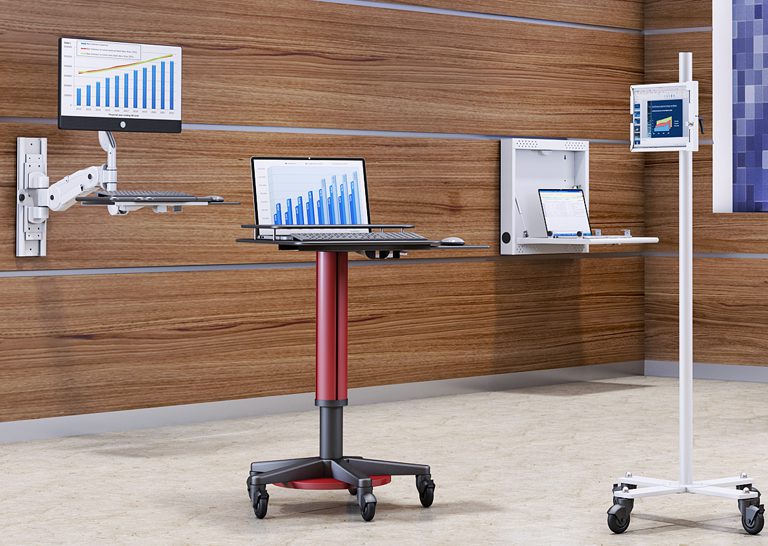
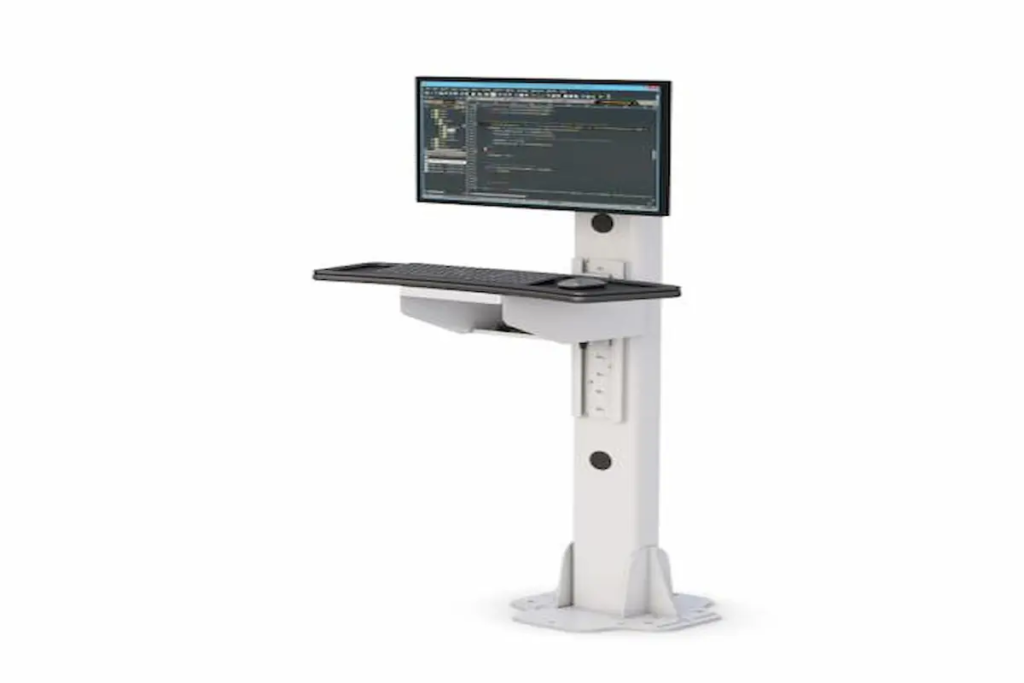
Organizations implementing Industry 4.0 strategies are increasingly adopting solutions like Ergoville’s floor post stands, computer racks, and customized workstation configurations through the desk configurator to support smarter and more connected workplaces.
As manufacturing technology continues evolving, workstation accessibility is becoming just as important as the technology itself.
How Do Industrial Computer Monitors Support Smart Factory Operations?
Modern factories generate enormous amounts of operational data. Production metrics, quality control information, maintenance alerts, machine diagnostics, and workflow instructions must be available to employees in real time.
Industrial computer monitors serve as the primary interface between workers and these digital systems.
Whether operators are monitoring production equipment, reviewing quality control data, or accessing work instructions, monitor visibility and accessibility directly affect operational performance.
An effective industrial computer stand ensures that critical information is always positioned where employees can easily see and interact with it.
Benefits include:
- Faster decision-making
- Improved workflow efficiency
- Reduced production delays
- Better visibility of operational data
- Enhanced communication between teams
As factories become more connected, industrial computer monitors are no longer optional tools—they are becoming essential components of daily operations.
Many organizations enhance these systems further through ergonomic monitor arms that improve monitor positioning and workstation flexibility throughout industrial environments.
Why Is Workstation Accessibility Becoming More Important?
Technology investments alone do not automatically improve productivity. Employees must be able to access and use those technologies efficiently.
Poorly positioned monitors can create numerous workplace challenges:
- Operators walking unnecessarily between stations
- Reduced visibility of production information
- Delayed response times
- Increased physical strain
- Workflow interruptions
Industrial facilities increasingly recognize that workstation accessibility directly influences operational efficiency.
A properly mounted monitor allows workers to interact with production data without leaving their designated work areas. This reduces unnecessary movement while helping maintain focus on critical operational tasks.
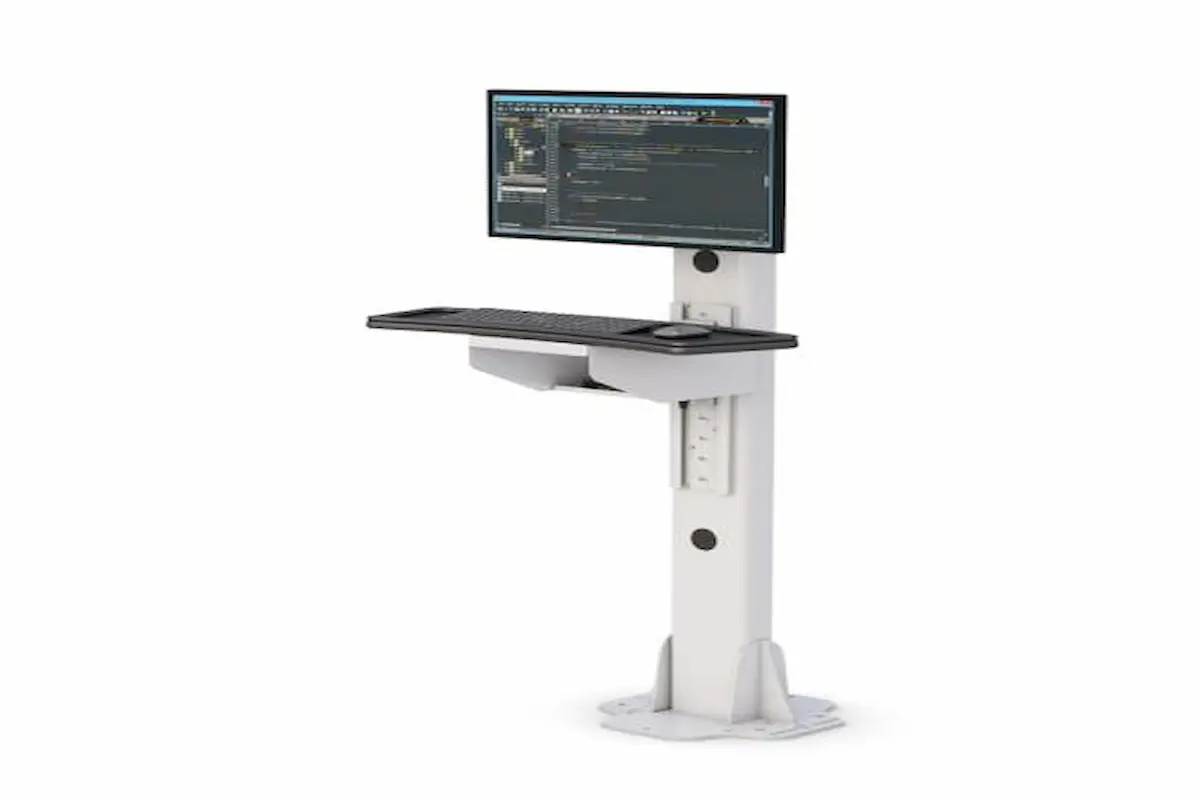
Solutions such as Ergoville’s floor post stands help organizations position technology where it delivers the greatest operational value.
Accessibility is particularly important in:
- Manufacturing facilities
- Warehouses
- Distribution centers
- Assembly lines
- Industrial laboratories
- Quality control stations
As industrial environments continue becoming more data-driven, workstation accessibility will remain a key component of digital transformation success.
How Are Industrial Workstations Supporting Digital Manufacturing?
Digital manufacturing depends on continuous access to information. Employees increasingly rely on industrial computer systems to interact with:
- Manufacturing Execution Systems (MES)
- Human Machine Interface (HMI) platforms
- Production scheduling systems
- Inventory management software
- Quality assurance applications
- Predictive maintenance platforms
Industrial workstations act as the bridge between employees and digital operations.
Without properly configured workstations, organizations may struggle to fully realize the benefits of Industry 4.0 initiatives.
Industrial computer stands help create organized environments that support digital workflows while improving equipment accessibility and operational efficiency.
Many manufacturers combine industrial monitor solutions with computer racks and track mounts to create comprehensive workstation ecosystems that support evolving operational requirements.
As manufacturing technology becomes more sophisticated, workstation infrastructure must evolve alongside it.
What Features Matter Most in Industrial Computer Stands?
Industrial buyers often focus heavily on monitor specifications and software capabilities. However, the stand supporting those technologies can have a significant impact on productivity and usability.
When evaluating industrial computer stands, several features deserve careful consideration.
Durability
Industrial environments require equipment capable of withstanding demanding conditions. Heavy-duty construction helps ensure long-term reliability.
Adjustability
Workers vary in height, responsibilities, and workflow requirements. Adjustable monitor positioning helps improve accessibility for different users.
Cable Management
Proper cable routing creates safer and more organized work environments while reducing maintenance concerns.
Equipment Protection
Industrial computer stands should help protect valuable hardware while supporting easy access for maintenance and upgrades.
Flexibility
As operational needs change, workstation systems should adapt without requiring complete replacement.
Organizations frequently integrate solutions such as CPU holders and specialized accessories to further enhance workstation functionality.
Why Does Ergonomics Matter in Industrial Environments?
Industrial workers often spend long hours interacting with computer systems throughout production shifts.
Poor monitor placement can contribute to:
- Neck strain
- Shoulder discomfort
- Eye fatigue
- Reduced productivity
- Increased employee frustration
While ergonomics is commonly associated with office environments, it plays an equally important role in industrial workplaces.
Proper monitor positioning allows employees to work more comfortably while maintaining visibility of critical production information.
Modern industrial workstation design focuses on improving both efficiency and employee wellbeing.
Solutions such as monitor arms provide additional flexibility by allowing operators to adjust monitors based on individual preferences and workflow requirements.
Organizations investing in ergonomic improvements often see benefits that extend beyond comfort, including improved productivity and employee satisfaction.
What Mistakes Should Companies Avoid?
Selecting industrial workstation solutions without fully evaluating operational needs can create long-term challenges.
Common mistakes include:
Prioritizing Price Over Functionality
The least expensive solution may not provide the durability or flexibility required for industrial environments.
Ignoring Future Expansion
Industry 4.0 initiatives continue evolving. Organizations should choose workstation systems capable of supporting future growth.
Overlooking Ergonomics
Poor monitor placement can negatively affect productivity and employee wellbeing.
Failing to Consider Workflow Requirements
Different industrial environments require different workstation configurations.
Manufacturing facilities, warehouses, laboratories, and distribution centers often have unique operational needs that should influence equipment selection.
Organizations planning long-term workstation strategies frequently use Ergoville’s desk configurator to design customized solutions that align with operational goals.
How Do You Choose the Right Industrial Computer Stand?
Choosing the right solution begins with understanding how employees interact with technology throughout daily operations.
Industrial decision-makers should evaluate:
What Technology Will Be Supported?
Consider monitor sizes, computer hardware, peripherals, and future equipment requirements.
Where Will the Workstation Be Used?
Environmental conditions can influence durability and mounting requirements.
How Frequently Will Operators Interact With The System?
Higher interaction frequency often increases the importance of accessibility and ergonomic positioning.
Will The Workstation Need To Expand?
Future-proofing helps maximize long-term investment value.
Does The Solution Support Industry 4.0 Goals?
The workstation should help improve visibility, efficiency, and operational flexibility.
Organizations often combine floor post stands, wall mounts, and computer racks to create integrated industrial workstation environments capable of supporting evolving digital manufacturing initiatives.
Industries That Benefit Most From Industrial Computer Stands
Industrial computer stands provide value across numerous sectors, including:
Manufacturing
Production monitoring, quality control, and machine management.
Warehousing
Inventory management, logistics tracking, and operational visibility.
Food Processing
Production oversight and compliance documentation.
Electronics Manufacturing
Precision assembly and process monitoring.
Industrial Automation
HMI systems, robotics monitoring, and machine diagnostics.
Laboratories
Testing, analysis, and documentation workflows.
As more organizations adopt smart factory technologies, industrial computer stands are becoming foundational infrastructure for digital operations.
Frequently Asked Questions
What is an industrial computer stand?
An industrial computer stand is a mounting solution designed to support industrial computer monitors and workstation systems in manufacturing and industrial environments.
Why are industrial computer monitors important?
Industrial computer monitors provide real-time access to production data, machine controls, quality information, and operational workflows.
How do industrial computer stands improve productivity?
They improve monitor accessibility, reduce unnecessary movement, and support more efficient interactions with digital systems.
What features should industrial computer stands have?
Key features include durability, adjustability, cable management, ergonomic positioning, and flexibility for future expansion.
Are industrial computer stands adjustable?
Many industrial computer stands offer adjustable positioning to improve accessibility and support different user requirements.
How do I choose the right industrial computer stand?
Evaluate equipment requirements, environmental conditions, workflow needs, ergonomic considerations, and future scalability before making a decision.