
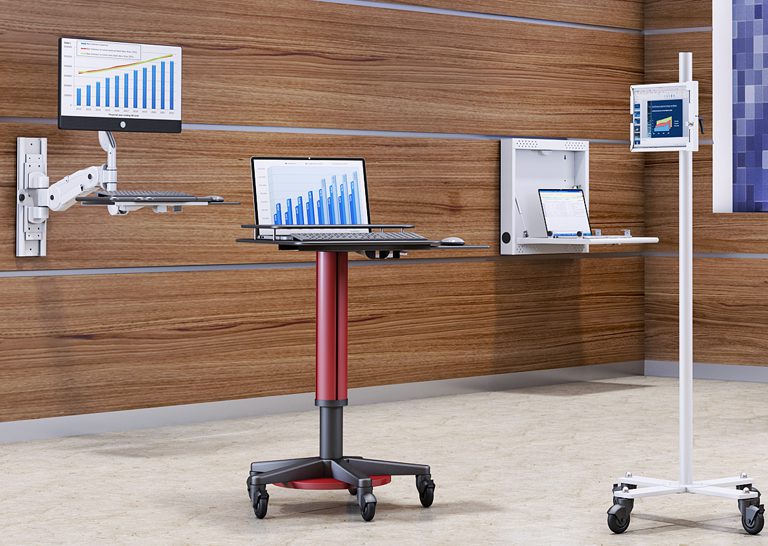
Why Industrial Computer Stands Are Becoming Critical Infrastructure for Industry 4.0
Manufacturing facilities are evolving rapidly. As Industry 4.0 technologies, industrial automation, connected devices, and real-time production monitoring become standard across modern operations, organizations need infrastructure that supports faster decision-making and better access to information.
Industrial computer systems are now at the center of production environments. Operators, engineers, quality control teams, and supervisors rely on digital dashboards, Manufacturing Execution Systems (MES), Human-Machine Interfaces (HMI), and industrial computer monitors to manage operations efficiently. However, even the most advanced technology can become ineffective if it is not positioned correctly.
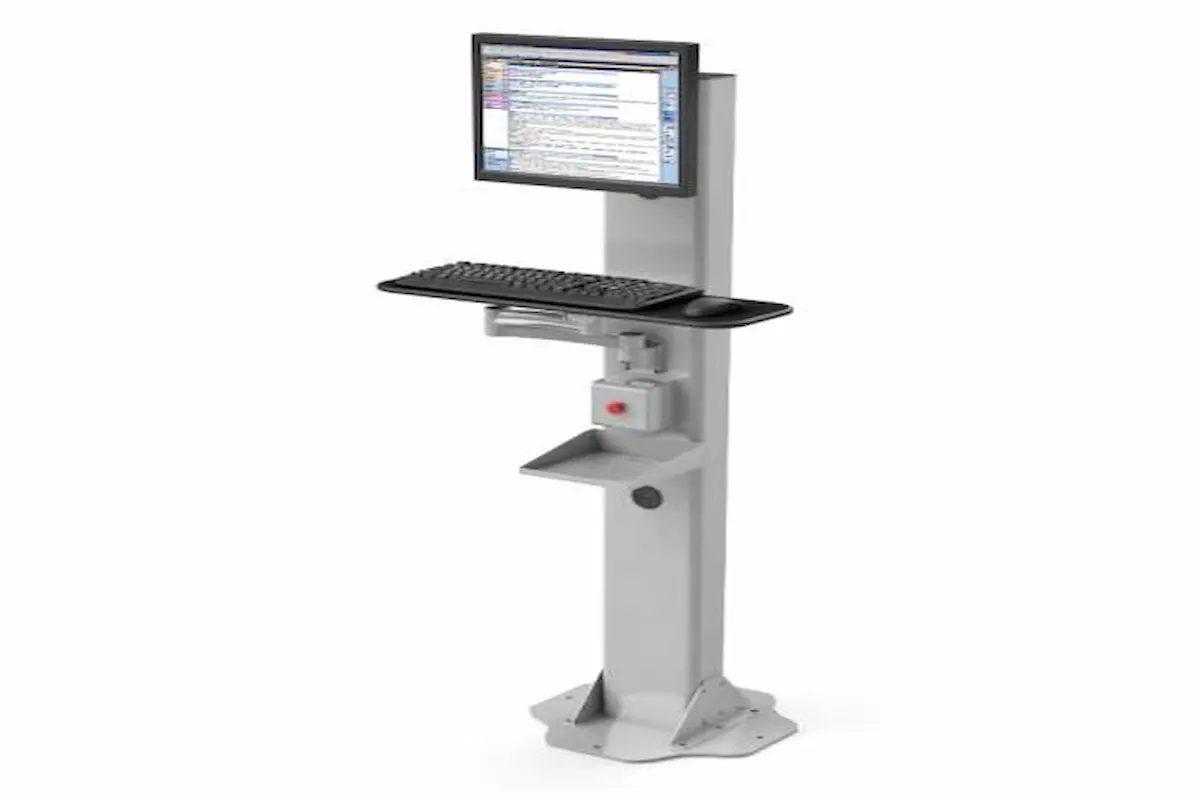
This is where an industrial computer stand becomes a critical component of modern manufacturing infrastructure. A properly designed stand floor mounted industrial computer stand provides stability, visibility, accessibility, and durability while supporting the operational requirements of demanding industrial environments.
As manufacturers continue investing in smart factory initiatives, industrial workstation infrastructure is becoming just as important as the technology itself.
Why Are Industrial Computer Stands Becoming More Important?
The industrial workplace has changed dramatically over the last decade.
Today’s production environments depend heavily on:
- Real-time monitoring
- Digital work instructions
- Production dashboards
- Automated systems
- Industrial software platforms
- Connected equipment
Employees need immediate access to information without disrupting workflows.
An industrial computer stand provides a stable and accessible platform for industrial computer monitors and workstations, allowing operators to interact with systems efficiently while remaining focused on production tasks.
Instead of placing equipment on temporary surfaces or workbenches, organizations can create dedicated workstation locations that improve both productivity and safety.
Facilities looking to standardize workstation deployment often combine industrial infrastructure with solutions such as floor post stands to create organized and durable production environments.
How Do Industrial Computer Stands Improve Manufacturing Efficiency?
Access to information plays a major role in manufacturing performance.
Production delays often occur when operators must leave their work area to retrieve information, check system status, or access production data.
An industrial computer stand helps eliminate these inefficiencies by positioning industrial computer monitors directly where information is needed.
Benefits include:
- Improved production visibility
- Faster access to operational data
- Reduced operator movement
- Better workflow continuity
- Increased productivity
- Improved response times
When operators can view critical information without leaving their workstation, decision-making becomes faster and more accurate.
This is especially important in environments where production data changes constantly throughout the day.
Organizations frequently enhance visibility using ergonomic monitor arms that allow displays to be positioned for optimal viewing angles.
Why Is Visibility So Important on the Production Floor?
Manufacturing environments rely on real-time information.
Operators may need immediate access to:
- Production metrics
- Quality control data
- Machine status reports
- Inventory systems
- Safety notifications
- Process instructions
Poor monitor placement can create unnecessary challenges.
Employees may need to walk to another location, adjust equipment repeatedly, or struggle to view important information clearly.
A properly positioned industrial computer monitor supported by a floor-mounted stand helps ensure information remains visible, accessible, and easy to use.
Improved visibility contributes to:
- Faster decision-making
- Reduced errors
- Better operational awareness
- Increased productivity
These improvements support both workforce efficiency and overall production performance.
How Are Smart Factories Changing Workstation Requirements?
Industry 4.0 initiatives continue transforming manufacturing operations worldwide.
Modern facilities increasingly rely on:
- Connected machinery
- Industrial Internet of Things (IIoT)
- Automation platforms
- Data analytics
- Cloud-based monitoring systems
- Digital production workflows
As technology adoption increases, workstation infrastructure must evolve as well.
Traditional workstation layouts may struggle to support modern production requirements.
A stand floor mounted industrial computer stand provides a flexible and durable foundation for digital manufacturing environments.
Rather than treating workstation placement as an afterthought, organizations are now incorporating workstation infrastructure into broader smart factory planning initiatives.
Solutions such as track mounts and wall mounts are often used alongside industrial computer stands to create highly adaptable production environments.
What Features Matter Most in an Industrial Computer Stand?
Selecting the right workstation infrastructure requires evaluating several key factors.
Heavy-Duty Construction
Industrial environments can be demanding.
A quality industrial computer stand should provide:
- Structural stability
- Long-term durability
- Resistance to workplace wear
- Reliable equipment support
Floor-Mounted Stability
Floor-mounted systems help minimize movement and vibration while supporting larger monitor configurations.
Equipment Accessibility
Operators should be able to interact with equipment quickly and comfortably.
Monitor Flexibility
Proper positioning improves visibility and workflow efficiency.
Long-Term Reliability
Industrial workstation infrastructure should support years of continuous operation.
Organizations often combine industrial stands with supporting accessories and ergonomic CPU holders to create organized and scalable workstation environments.
Why Does Ergonomics Matter in Industrial Environments?
Ergonomics is often associated with office work, but it is equally important in industrial settings.
Employees regularly interact with:
- Computer monitors
- Touchscreen systems
- Industrial software
- Data dashboards
- Equipment controls
Poor monitor placement can create unnecessary strain while reducing usability.
Proper workstation design helps improve:
- User comfort
- Monitor visibility
- Productivity
- Workflow efficiency
- Employee satisfaction
Industrial computer stands support ergonomic workstation positioning by allowing equipment to be placed where it is most accessible.
When combined with adjustable monitor solutions, organizations can further improve user experiences while supporting long-term operational performance.
Which Industries Benefit Most From Industrial Computer Stands?
Although manufacturing is the most common application, industrial computer stands provide value across numerous environments.
Manufacturing Facilities
Support production monitoring, quality control, and operational visibility.
Warehouses and Distribution Centers
Provide access to inventory systems, logistics platforms, and warehouse management software.
Industrial Processing Plants
Support monitoring of production systems and operational processes.
Laboratories
Provide secure workstation support for testing and analysis systems.
Quality Assurance Departments
Improve visibility and accessibility for inspection and reporting activities.
The versatility of industrial workstation infrastructure makes it valuable wherever digital systems support operational decision-making.
What Mistakes Should Buyers Avoid?
Choosing the wrong workstation infrastructure can create unnecessary costs and operational challenges.
Common mistakes include:
Focusing Only on Initial Cost
Lower-cost solutions may lack durability or long-term reliability.
Ignoring Environmental Conditions
Industrial environments often require more robust workstation support systems.
Overlooking User Accessibility
Workstations should be designed around employee workflows.
Neglecting Future Expansion
Technology requirements frequently evolve over time.
Organizations should choose infrastructure capable of adapting to future operational needs.
Proper planning helps maximize long-term return on investment.
How Do You Choose the Right Industrial Computer Stand?
Before selecting a workstation solution, organizations should evaluate several important considerations.
What Equipment Will Be Supported?
Consider monitor size, computer hardware, peripherals, and accessories.
What Environment Will The Stand Operate In?
Industrial conditions influence durability requirements.
How Will Employees Interact With The Workstation?
User workflows should guide placement decisions.
Is Flexibility Important?
Future workstation modifications may require adjustable configurations.
Will Technology Requirements Expand?
Planning for growth helps reduce future infrastructure costs.
Many facilities use the desk configurator alongside industrial workstation planning to create scalable and future-ready environments. Organizations managing multiple technology assets often incorporate computer racks to support broader infrastructure strategies.
Frequently Asked Questions
What is an industrial computer stand?
An industrial computer stand is a durable workstation support system designed to hold industrial computer monitors and related equipment in demanding environments.
What are industrial computer stands used for?
They are used to improve monitor visibility, workstation accessibility, and operational efficiency in manufacturing and industrial facilities.
What is a floor mounted industrial computer stand?
A floor mounted industrial computer stand is a workstation support system anchored to the floor to provide stability and long-term durability.
Which industries use industrial computer monitors?
Manufacturing, warehousing, logistics, processing plants, laboratories, and quality control departments commonly use industrial computer monitors.
What features should an industrial computer stand have?
Key features include durable construction, floor-mounted stability, monitor support, ergonomic positioning, and long-term reliability.
How do I choose the right industrial computer stand?
Evaluate equipment requirements, environmental conditions, accessibility needs, workstation placement, and future scalability before making a decision.