
Mobile Computer Carts for Healthcare Efficiency (2026 Guide)
Introduction
Mobile computer carts have become essential tools for healthcare facilities striving to deliver faster, safer patient care. In 2026, hospitals and clinics nationwide rely on these versatile carts to bring technology directly to the point of care.
This guide covers hospital mobile computer carts, their clinical applications, power systems, and implementation strategies. It’s written for healthcare administrators, IT professionals, and facility managers who need practical solutions for improving workflow efficiency. Whether you’re managing a small clinic or overseeing a large hospital network, understanding these mobile workstations matters for your operations.
Quick Answer: Mobile computer carts are wheeled workstations that enable healthcare professionals to access electronic health records, administer medications, and document care at the patient’s bedside—reducing errors and saving valuable time.
What You’ll Learn:
- How mobile medical carts improve patient safety
- Key components and power systems to consider
- Clinical benefits across different departments
- ROI calculations and implementation steps
- Solutions to common adoption challenges
Understanding Mobile Computer Carts in Healthcare Settings
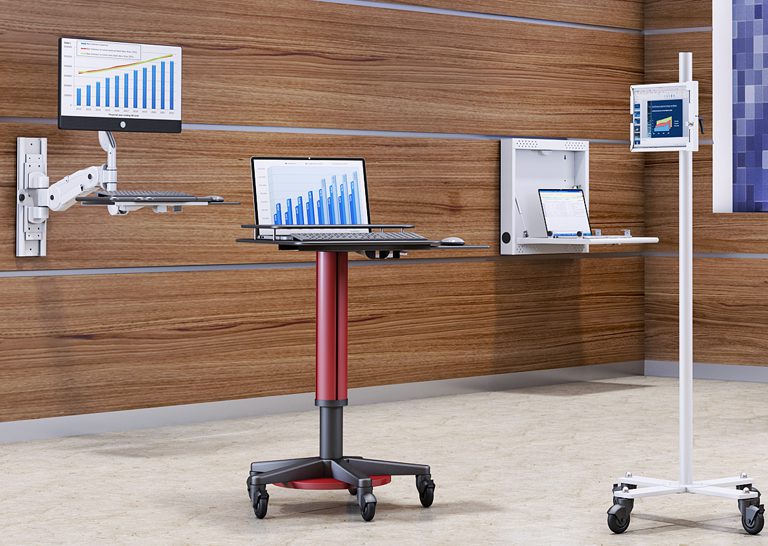
Hospital mobile computer carts are wheeled units equipped with monitors, computers, input devices, and power systems. They bring digital tools directly to where care happens. This mobility eliminates the need for nurses and physicians to walk back to fixed stations, which traditionally created documentation delays.
With electronic health record mandates and real-time verification requirements, healthcare facilities demand tools that support immediate data entry. Mobile medical computer carts meet this demand by making EHR access convenient at every bedside.
Medical Mobile Computer Cart Components
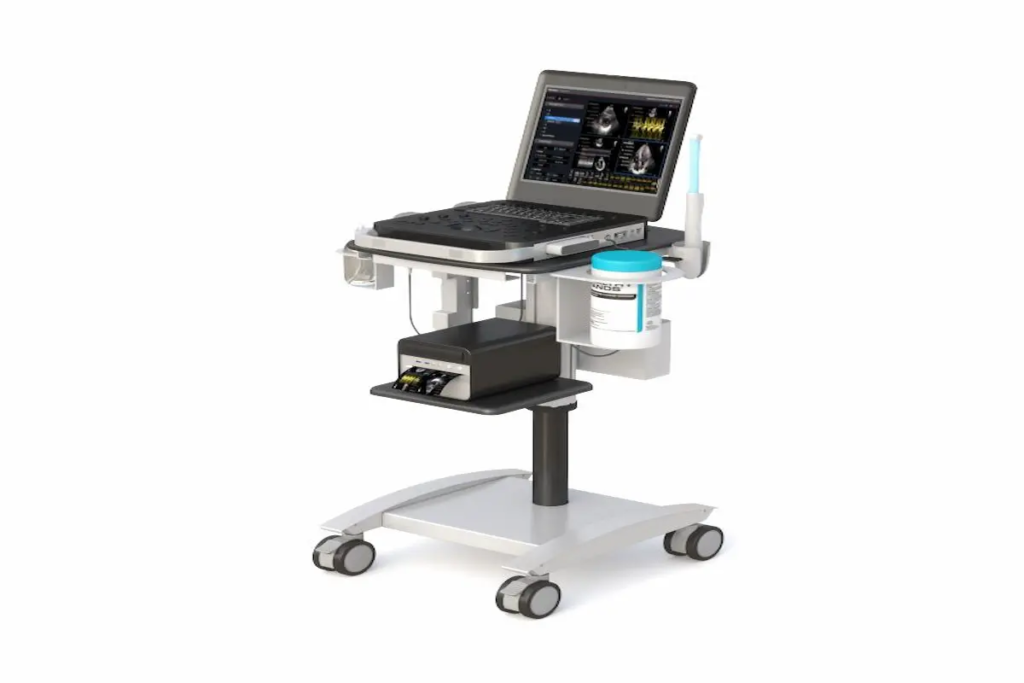
Essential hardware includes monitor mounts with anti-microbial bezels, secure CPU storage compartments, and input devices like keyboards and barcode scanners. Many models feature extra shelf space for printers or diagnostic tools. The best medical mobile computer carts accommodate tablets, laptops, and full desktop setups depending on clinical needs.
These components directly support patient care efficiency. When staff can easily transport equipment between rooms, they spend more time with patients and less time searching for technology.
Mobile Medical Cart Power Systems
Power systems represent a critical decision point. Battery-powered models offer true mobility throughout work hours without being tethered to outlets. Lithium-Iron-Phosphate (LiFePO₄) batteries now deliver 8-12 hours of runtime—enough for full shifts. They also support hot-swap capability, meaning staff can replace depleted batteries without shutting down the cart.
Plug-in models cost less upfront but limit movement and can interfere with infection control protocols. For facilities that need mobile power without compromise, LiFePO₄ systems offer exceptional value and longevity.
At Ergoville, we offer computer carts designed to withstand daily healthcare demands while providing the mobility your staff needs.
Healthcare Applications and Clinical Benefits
Mobile workstations adapt to various healthcare environments. Their functionality makes a real difference in departments where every minute counts.
Emergency Department Efficiency
Emergency departments require rapid patient assessment and real-time documentation. Mobile laptop carts allow triage nurses to capture vital signs and update records instantly. One health system reduced documentation lag from 32 minutes to just 2.2 minutes after implementing point-of-care mobile solutions.
This efficiency boost improves patient throughput and reduces errors that occur when documentation happens hours after care.
Surgical Suite Integration
Sterile environments demand equipment that supports rigorous cleaning procedures. Modern medical mobile carts feature IP65-rated components, antimicrobial housing, and smooth surfaces without crevices. These features ensure carts can withstand daily disinfection without degradation.
Surgical teams rely on these carts for procedure documentation, inventory management, and real-time access to patient histories.
Patient Room Bedside Care
Bedside care represents the most common application. Nurses use mobile medical carts for medication administration with barcode verification, reducing medication errors significantly. They also support patient monitoring, family communication, and telehealth consultations.
Key Benefits:
- Reduced walking time between rooms and nurse stations
- Immediate access to patient records
- Real-time medication verification
- Improved patient satisfaction scores
These point-of-care benefits translate directly to better outcomes and more productive work environments.
Implementation and ROI in Healthcare Facilities
Understanding clinical benefits helps, but administrators also need to see the business case. Mobile computer carts represent an investment that pays dividends through efficiency gains and error reduction.
Healthcare Mobile Cart Selection Process
Selecting the right solution requires a systematic approach:
- Assess current workflow inefficiencies – Document how much time staff spends walking to fixed stations and waiting for available computers
- Evaluate infection control requirements – Determine cleaning protocols and select carts with compatible materials
- Determine power and mobility needs – Calculate shift durations and required battery runtime
- Calculate staff time savings potential – Estimate documentation time improvements using industry benchmarks
Cost-Benefit Analysis for Medical Facilities
| Factor | Without Mobile Carts | With Mobile Carts |
| Documentation time per shift | 166-175 minutes | 130-145 minutes |
| Specimen entry lag | 32 minutes | 2-3 minutes |
| Walking time to stations | High | Minimal |
| Medication error risk | Higher | Reduced |
The typical price range for powered mobile computer carts falls between $1,200 and $4,500. However, facilities often recover this investment within 18-36 months through staff time savings and error reduction.
Looking for economical full size carts that deliver professional functionality? Contact Ergoville to discuss solutions that fit your facility’s budget.
Common Healthcare Implementation Challenges and Solutions
Successful adoption requires addressing predictable obstacles before they become problems.
Infection Control Compliance
Solution: Select carts with antimicrobial surfaces, sealed keyboards, and IP-rated components. Ensure all materials tolerate your facility’s approved disinfectants without degradation.
Staff Adoption Resistance
Solution: Involve nurses and physicians in the selection process. Provide hands-on training before rollout. Start with pilot programs in one department to demonstrate benefits before expanding.
Network Connectivity Issues
Solution: Audit Wi-Fi coverage in all patient care areas. Modern facilities need Wi-Fi 6 capability to support multiple devices reliably. Consider carts with offline caching functionality for backup.
Addressing these challenges proactively creates the foundation for successful implementation.
Conclusion and Next Steps
Mobile computer carts improve healthcare efficiency by bringing technology to the point of care. They reduce documentation time, minimize errors, and help staff focus on patients rather than paperwork.
Your Next Steps:
- Conduct a workflow assessment in your highest-volume departments
- Evaluate vendors based on power systems, durability, and infection control features
- Plan a pilot program before full facility deployment
Explore our selection of computer carts designed for healthcare environments, or check our limited special offers for current promotions.
Frequently Asked Questions
How long do mobile computer cart batteries last on a single charge?
LiFePO₄ batteries typically provide 8-12 hours of runtime per charge. This covers a full nursing shift without interruption. Hot-swap systems allow battery replacement without powering down.
Are mobile medical carts compatible with existing EHR systems?
Yes. Mobile computer carts support standard healthcare IT configurations. They integrate with major EHR platforms through your existing network infrastructure.
What infection control features should I look for?
Prioritize antimicrobial housing, IP65-rated components, sealed keyboards, and smooth surfaces without crevices. These features support rigorous disinfection protocols.
How much do hospital mobile computer carts cost?
Prices range from $1,200 to $4,500 depending on features. Powered models with advanced battery systems fall at the higher end. Many facilities achieve ROI within two years.
Can mobile carts improve patient satisfaction scores?
Research indicates that bedside documentation increases patient-perceived attentiveness. Facilities using point-of-care mobile solutions report improvements in HCAHPS communication scores.
Where can I find mobile computer carts for my New York healthcare facility?
Ergoville, based in College Point, New York, offers mobile workstations designed for healthcare environments. We provide solutions that balance functionality, durability, and price for facilities throughout the region.
“`