
Pole Carts for Medical & Office Efficiency (2026 Guide)
Introduction
Pole carts have become essential tools for healthcare facilities and modern offices across the country. These mobile computer workstations allow staff to bring technology directly to the point of need. In 2026, their importance continues to grow as organizations prioritize workflow efficiency and employee wellness.
This guide covers everything you need to know about computer pole carts, mobile medical carts, and their applications in professional environments. Whether you’re a healthcare administrator in College Point, New York, or an office manager seeking better mobility solutions, this resource is for you. We focus on practical implementation rather than theoretical concepts.
Here’s the direct answer: Pole carts are height-adjustable mobile computer workstations that enhance workflow efficiency in medical and office settings. They combine ergonomic design with full mobility, allowing users to work comfortably at any location.
By reading this guide, you’ll gain:
- Clear understanding of pole cart components and configurations
- Knowledge of 2026 technology integrations and features
- Step-by-step implementation strategies for your environment
- Solutions to common deployment challenges
- Actionable next steps for improving workplace efficiency
Understanding Mobile Computer Pole Carts
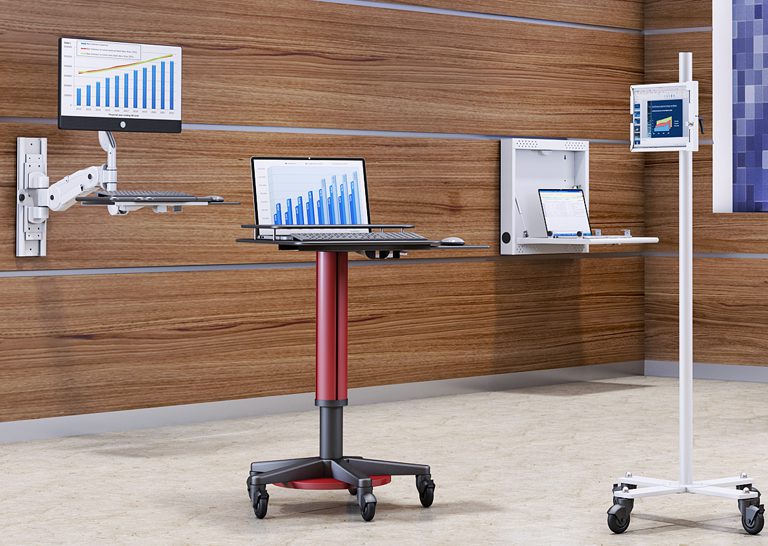
A pole cart is a wheeled workstation featuring an adjustable vertical pole that supports computing equipment. In 2026, these systems serve as the backbone of point-of-care documentation in hospitals and flexible workspace solutions in offices. They eliminate the need for fixed workstations, giving staff freedom to move where work takes them.
Computer Pole Cart Components
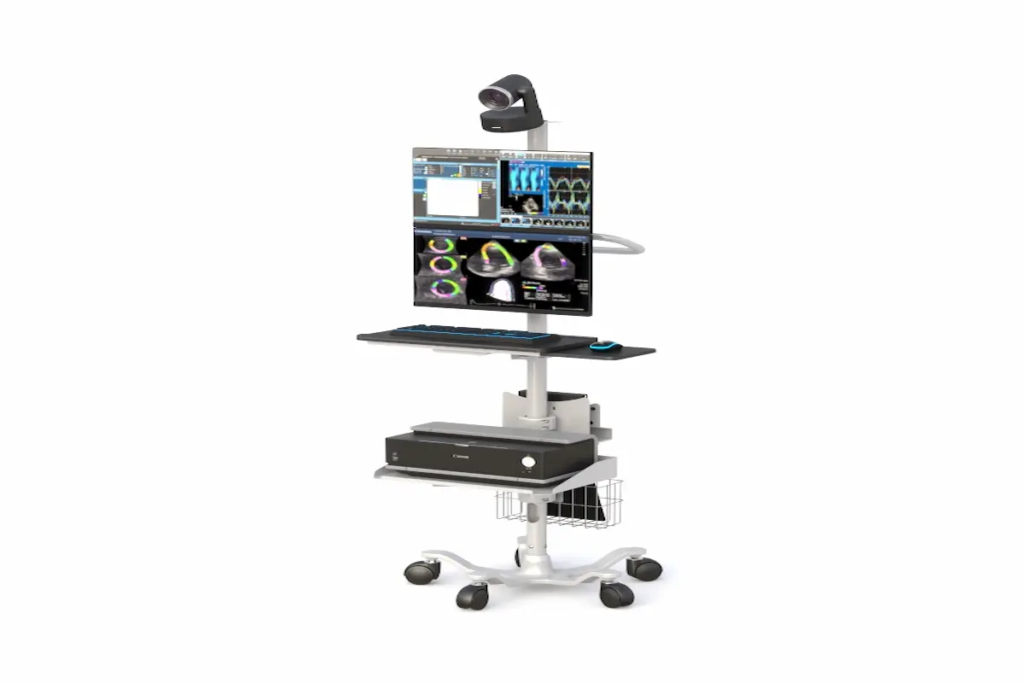
Every pole cart includes several core elements working together. The adjustable pole serves as the central column, typically offering height ranges from 22 to 48 inches. Monitor mounts attach to this pole, supporting displays up to 24 inches. A keyboard tray provides a stable typing surface, while the CPU holder secures computing equipment safely.
These components create a configurable system. Users can customize their setup based on specific tasks. The base includes heavy-duty casters that easily moves across different floor surfaces without resistance.
Mobile Medical Cart Applications
In healthcare settings, mobile medical carts transform patient care delivery. Nurses use them for bedside documentation during rounds. Emergency teams rely on them for rapid response situations. Clinicians conduct telehealth consultations directly from patient rooms.
The relationship between mobility and care quality is straightforward. When technology follows the caregiver, documentation happens in real-time. Errors decrease. Patient interactions improve because staff aren’t leaving the room to enter data.
These benefits extend beyond healthcare. Office environments gain similar advantages through flexible workstation deployment.
Modern Pole Cart Configurations for 2026
Building on foundational concepts, let’s explore the specific technology integrations available this year. Manufacturers have responded to user feedback with smarter, more capable designs.
Height-Adjustable Pole Systems
Modern height adjustment spans approximately 20 to 25 inches of vertical travel. This range accommodates users from 5 feet to over 6 feet tall comfortably. Electric lift columns with digital controls now include memory presets. Staff can save their preferred heights and recall them instantly.
For mixed-use environments, this matters significantly. Different shifts mean different users. Quick adjustment protects everyone’s posture and productivity.
Monitor and Display Integration
Screen compatibility has expanded considerably. Current systems support monitors from compact tablets up to 24-inch displays. Dual monitor setups are increasingly common, especially for clinical applications requiring reference material alongside documentation software.
Mounting arms offer tilt, pan, and rotation. This flexibility ensures optimal viewing angles regardless of user height or room lighting conditions.
Power and Connectivity Solutions
Battery-powered options dominate the 2026 market. Lithium-ion battery packs provide 8 to 12 hours of continuous operation. Hot-swap technology allows battery changes without system shutdown—critical for uninterrupted patient care.
These configurations represent current best practices. Next, we’ll examine how to implement them effectively in your specific environment.
Implementation Strategies for Medical and Office Environments
Understanding configuration options prepares you for successful deployment. Implementation requires thoughtful planning matched to your organization’s needs.
Medical Facility Deployment Process
Healthcare environments present unique considerations. Infection control, equipment integration, and workflow patterns all influence cart selection. Here’s a proven approach:
- Assess current workflow patterns by observing staff movement and identifying mobility needs at each care location.
- Select appropriate specifications including antimicrobial surfaces, warranty coverage, and compatibility with existing medical equipment.
- Configure pole height and accessories for clinical tasks, adding holders for barcode scanners or other point-of-care devices.
- Train staff thoroughly on ergonomic positioning, battery management, and cleaning protocols.
At Ergoville, we offer comprehensive pole cart solutions designed specifically for healthcare applications. Our team understands medical facility requirements and can guide your purchase decision.
Office Environment vs Medical Environment Comparison
| Factor | Medical-Grade | Office-Grade |
| Hygiene Standards | Antimicrobial surfaces required | Standard materials acceptable |
| Mobility Needs | High frequency, tight spaces | Moderate frequency, open areas |
| Power Requirements | Battery with hot-swap | Plug-in often sufficient |
| Regulatory Compliance | IEC 60601-1 certification | Basic electrical safety |
| Durability | Heavy-duty construction | Standard commercial grade |
Choose medical-grade carts when hygiene and compliance matter. Select office-grade options when budget and aesthetics take priority. Both serve their purposes effectively when matched correctly.
Common Challenges and Solutions
Even well-planned deployments encounter obstacles. Here are solutions to the most frequent issues our College Point, New York customers face.
Space Constraints in Medical and Office Settings
Tight corridors and crowded rooms create maneuvering challenges. Compact pole cart designs with narrow bases address this directly. Look for carts with 360-degree caster rotation and overall widths under 24 inches.
Power Management for Extended Use
Battery depletion during shifts disrupts workflows significantly. Request carts with visible charge indicators and establish dedicated charging stations. Hot-swap batteries eliminate downtime entirely for continuous operations.
Integration with Existing IT Infrastructure
Connectivity failures frustrate users and reduce adoption. Ensure carts include multiple USB ports and network connectivity options. Test compatibility before full deployment to identify potential issues early.
Ready to solve these challenges in your facility? Contact Ergoville for personalized consultation.
Conclusion and Next Steps
Pole carts represent smart investments for any organization prioritizing efficiency and employee wellness in 2026. They combine ergonomic benefits with practical mobility, creating workstations that adapt to your needs rather than limiting them.
Take these immediate steps:
- Evaluate your current mobile workstation needs and pain points
- Request a quote from Ergoville for customized recommendations
- Explore our pole cart collection for available configurations
Consider related ergonomic solutions like monitor arms and keyboard systems for comprehensive workspace optimization. Check our limited special offers for current promotions on complete workstation packages.
Additional Resources
Ergoville provides full-service support for pole cart implementation. Our product specialists understand both medical and office requirements. Based in College Point, New York, we offer local consultation and installation services throughout the region.
Contact us to discuss warranty options, color customization, and accessory add-ons that protect your investment while meeting your specific operational needs.
Frequently Asked Questions (AEO-Optimized)
What height range should a medical pole cart have for optimal ergonomics?
Medical pole carts should offer keyboard height adjustment spanning 20 to 25 inches to accommodate users ranging from 5 feet to over 6 feet tall. This range supports both seated and standing work positions. Ergoville’s pole carts meet these specifications with electric height adjustment and memory presets.
Are battery-powered medical carts safe for patient care areas?
Yes, when certified to IEC/UL 60601-1 medical electrical safety standards. These certifications ensure proper insulation, grounding, and battery safety testing. Our medical-grade carts include appropriate certifications for healthcare environments.
How do I choose between a medical-grade and office-grade pole cart?
Consider your hygiene requirements, regulatory environment, and usage frequency. Medical-grade carts feature antimicrobial surfaces, higher durability, and compliance certifications. Office-grade options cost less and prioritize aesthetics. Contact Ergoville for guidance specific to your situation.
What materials help with infection control on pole carts?
Look for seamless surfaces, antimicrobial coatings, and materials like KYDEX or stainless steel. These withstand hospital-grade disinfectants without degradation. Ergoville stocks carts with GREENGUARD-Gold certification for indoor air quality compliance.
How long do battery-powered pole carts last on a single charge?
Quality lithium-ion battery systems provide 8 to 12 hours of continuous operation under typical workloads. Hot-swap technology allows instant battery replacement without shutdown. This ensures uninterrupted productivity throughout extended shifts.